


"You need to put him in the cot"
Eight words that quietly sabotage breastfeeding before it even begins.

Disclaimer: There are myriad reasons why women stop breastfeeding (or never start). Birth trauma, zero support, juggling work, and all the ugly cultural stuff that makes breastfeeding past infancy feel weird or shameful to name but a few. For the purpose of this piece I will be talking specifically about how separating mums and babies from the start makes breastfeeding exponentially more difficult.
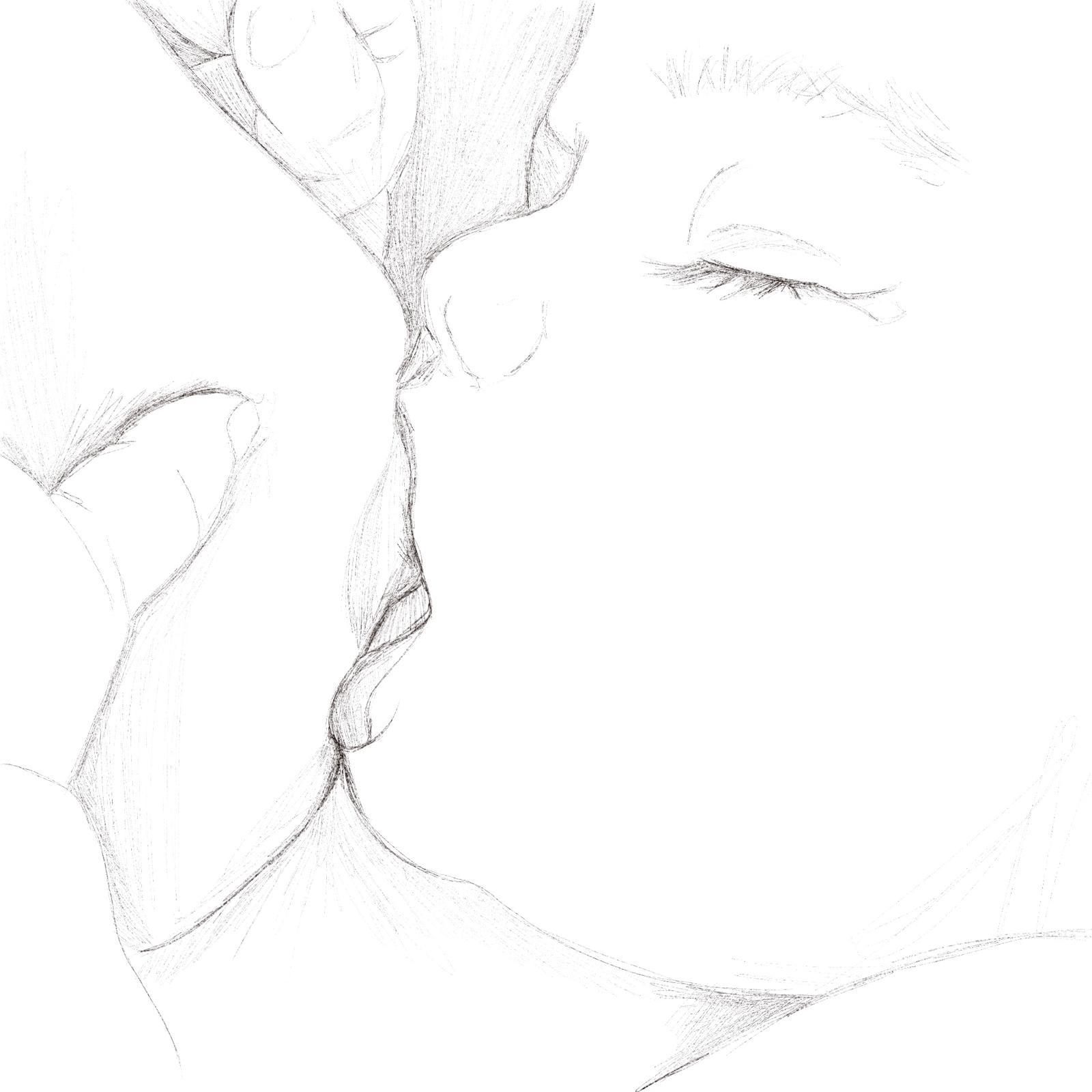
“You need to put him in the cot”
8 words that felt strange to me, even then.
My son had barely been in the world 12 hours when I was being told to put him in a plastic container. Not the Tupperware type… The one by the side of your hospital bed after you give birth lined with towels.
She came in to check on us – the women in the ward, all fresh from the most transformative event of our lives. Handed me a little white paper pot with a couple of paracetamol. Because that’s all you get after your vagina has been sliced open – fuck, we really are hardcore.
Eyelashes. Huge, thick, black eyelashes. She didn’t smile. On autopilot I imagine.
It’s a funny thing. Being in a state of sheer “what on earth - this is absolutely crazy - I have a baby - a real life baby - and he is mine – and I am his - and I am a mother - and I am responsible for this tiny little thing - and they are going to let me take him home - and then what?” while being surrounded by people that don’t bat an eyelid.
Yes, this was the most transformative day/night of my life, but she’d seen it all before, a million times over.
“Make sure you put him down soon”
I was holding my son, propped up in bed. I could hear the woman across from me moaning and crying. She’d had a caesarean. She was in pain. I felt bad for her. At one point I heard her husband snoring and then her baby crying and then her cussing at the sleeping man beside her…
My son had been crying too.
He didn’t want to be in the plastic container. He wanted to be in my arms. Wrapped up warm. The next best thing to the safety he’d know for the 9 months previously.
I had tried to put him in there – in the cot. Because that’s what you’re meant to do… It’s what every prenatal piece of advice had told me to do. But he had cried, and cried, so I had scooped him up with all the trembling care of someone so tender and new to this. With the slow, gentle touch of someone who really thinks she could break this baby.
Scooped him up and put him to my breast. Like I’d been shown when he was just minutes old. He latched just as he had then. Perfectly.
He knew what he was doing much more than I. If I wasn’t still throbbing from having just birthed him, I’d have asked him if he’d done this before.

Wide and deep with more areola above his top lip than below his bottom. “Watch for the corner of his jaw when sucking” I was told, “It should move rhythmically… Just like that”.
This was something I would watch for many times over the coming weeks. Making sure he was getting enough. Sucking correctly. Getting his fill.
And he did.
At his 10 day postnatal check he’d put on weight – something that is apparently quite rare – especially when exclusively breastfeeding. Most babies drop weight at this point as they get used to feeding outside of the womb.
I was so proud of him. Of us. Of my body. It was doing what it was supposed to. Feeding my baby. Day and night.
In the UK, 81% of mothers start breastfeeding. By six months, only 1% are still exclusively breastfeeding.
Why?
Are we just less good at it than other nations? Are our boobs malfunctioning more than other women’s in other countries? Or do we live in a culture that systematically destroys conditions that make breastfeeding work?
It starts with those 8 words:
"You need to put him in the cot."
It goes without saying that the nurse who said this to me in that hospital ward wasn't being cruel and she wasn't trying to sabotage my breastfeeding journey. She was following rules and guidelines. Guidelines created by a system that has at times lost sight of evolutionary biology in favour of policies that look safe on paper but create problems in practice.
And I get it.
After giving birth mothers are exhausted (wired, unlikely to be able to sleep but exhausted). And you could reasonably argue that exhausted, sleep deprived mothers are not safe caregivers.
So you could reasonably argue that putting a baby in a safe, contained cot makes sense, on paper.
But when a baby is crying, needing their mother, simply telling mothers to leave them in their cots doesn’t work. And while in this instance I was likely being told to put him down because they didn’t want me to, I don’t know, drop him in a state of complete delirium, putting babies in separate sleep spaces because it is ‘safer’ is part of a wider narrative that is inherently flawed.
For many reasons – one of which is the topic of conversation in this article (and of this week) – breastfeeding.
Because the cot is in many ways the first barrier between a mother and the kind of responsive, round-the-clock relationship that actually makes breastfeeding work in the way it was designed to.
There's a fundamental contradiction at the heart of how new mothers are advised about feeding and sleeping that sets them up to fail at both. Health professionals enthusiastically promote breastfeeding as the crème de la crème - and they're right to do so – it is the best source of nutrition for your baby. That is a scientific fact regardless of how controversial it seems to have become to say that (it saddens me that this is where we are).
But many women feel they're given unrealistic expectations by professionals keen to promote the benefits that leave them “unprepared for the pain, problems and relentlessness of early infant feeding”. At the same time, these very same professionals insist that babies must sleep in their own separate sleep spaces from birth - advice that directly undermines the day-and-night responsiveness that makes breastfeeding actually work.
Mothers are told breastfeeding is natural and wonderful while simultaneously being advised to create physical barriers that make it exponentially harder.
When women inevitably struggle with this contradictory setup, they blame themselves rather than questioning the advice.
Bed-sharing - the completely natural arrangement that has supported successful breastfeeding and kept our species alive for millennia - is presented as dangerous and irresponsible rather than what it often is – not only the most natural state to be as a mammal with young, but as a practical solution that allows mothers to feed responsively without the exhausting logistics of cot-to-breast transfers multiple times a night.
Those who do somehow manage to navigate the contradictory advice and make it past those brutal first few months are then met with arguably one of the most insidious players in the baby sleep game… The sleep training industry.
"Is he sleeping through the night yet?" becomes the question of choice and when the answer is, no obviously not Karen, many mothers are encouraged to move their babies to their own room - often in the name of "better sleep for everyone."
Sleep trainers abound, waving their magic wands promising to solve the problems created by this separation.
This is an industry that has exploded in the UK over the past decade, with sleep consultants and coaches showing up in every tired mothers feed across social media and parenting groups, flying in like fairy godmothers promising to give you your life back. But only if you pay the fee.
Even if your milk supply is fine, even if you want to continue breastfeeding, having to get up and traipse across the landing while trying not to stub your toe on the banister before aggressively whispering “fuck! shit! bugger!” to another room multiple times a night will make you want to quit.
When you're exhausted and your baby is crying from down the hall, the physical and mental effort required makes continuing feel impossible.
And then, for those who continue on the charade of suppressing their instincts in the name of our lord Huckleberry who see that the sleep training has “worked" with their babies sleeping longer stretches because they've learned their needs won’t be met, we see a milk supply that finally crashes due to lack of stimulation.
It's a perfect storm.
And before you know it, another one bites the dust.
For mothers who work outside the home, being close to their babies at night is even more essential for maintaining breastfeeding – which is again, rarely acknowledged in feeding advice.
When you're separated from your baby for eight+ hours a day, those night time hours become a real lifeline.
When my son was 13 months, he was in nursery for 3 days a week, with my parents for 1. I would dutifully pump milk for him to have while we were apart.
There were many occasions where he barely touched it – he had never taken a bottle – something that I think was very uncommon in his nursery.
I was extremely worried about this in the run up to him starting. I berated myself constantly about my ‘choices’. Why hadn’t I bottle fed him earlier. Why hadn’t I forced early separation so that he would transition to nursery better? Ridiculous really, because of course true independence comes first form a deep dependence.
But the moment he came home he would feed. And at night we would go to bed together, sleep tiny head to milky chest, and he would feed throughout the night.
This isn't unusual or problematic. When babies can't access their mother's milk during the day, they naturally compensate by feeding more frequently when she's available. This is obvious. But the advice to move babies to separate rooms can so often coincide with mothers returning to work – so we see babies and young children without the means to make up for what they missed during the day at night. Just when your baby needs those concentrated night time feeds you're told to prioritise everyone getting "better sleep" by sleeping apart.
Of course, the irony is that for many mothers, sleeping together is the way you get more sleep. It’s also a time where you feel like you’re actually seeing your child. Spending time with them even though they’re sleeping.
It’s not lost on me that for many working mothers the time spent with their children during a day might total a couple of meagre hours… An hour before drop off and an hour or so before bed. For me, bedsharing has meant I get to feel close to my son after the days separation. It’s something I actually feel very grateful for.
Take breastfeeding out of the equation for a moment… The fact is that sleeping separately from those we love is not a natural state for humans. For the vast majority of human history, sleeping alone was unusual – not just for mothers and babies but for everyone. Across cultures, countries, and centuries, people have long got comfy with others at night - friends, family, colleagues, and even complete strangers!
This article in the BBC does a brilliant job of talking about the history of this citing the famous example of Richard the Lionheart sharing a bed with Philip II of France to seal a political alliance - an act not seen as scandalous or weird, but as a gesture of trust.
Sharing a bed was never seen as anything other than completely unremarkable for most of our evolutionary timeline.
The idea that every person - and every baby - should have their own “designated sleep space” is a product of industrialisation, Victorian ideals about privacy, and more recently, a capitalist consumer culture that can sell you a cot, a crib, a Moses basket, a bedside crib, and a “next stage” bed before your child can even count to ten.
We’ve medicalised and monetised what used to be the most natural, normal thing in the world – that is, sleeping beside the people we love.
Humans have evolved to expect the physical closeness of others at night – and for babies their brain tells them their survival depends on it (because it does). And it’s sad, because the stats on breastfeeding show that more mothers clearly WANT to breastfeed.
Mothers initiating breastfeeding has actually risen from 66% in 2005/06 to 74% in 2010/1, and the proportion still breastfeeding at 6–8 weeks in England reached 52.7% in 2023/24 (up from 49.2% the previous year). But that still means that nearly half of babies born are not receiving any breastmilk past this point…
These aren't women who don't care or don't understand that breastmilk is best for their babies - they're mothers who want to give their children every advantage possible.
Most mothers would move mountains to do what's best for their children. When they stop something they know is beneficial, it's usually because they've been failed by the system - poor support, limited options, and yes, the systematic separation of mothers and babies that goes against our deep-rooted evolutionary need for shared sleep and proximity. We're seeing the biological consequences of cultural decisions that make breastfeeding exponentially harder than it needs to be.
Because the health implications of these failed breastfeeding relationships extend far beyond individual families. Low breastfeeding rates mean higher rates of illness, infections, and chronic conditions - costs that ripple through our entire healthcare system. Breastfed babies have significantly lower rates of ear infections, reduced incidence of pneumonia, RSV, respiratory infections, gastrointestinal illnesses and serious infections like sepsis among other benefits.
For mothers, breastfeeding reduces risk of breast and ovarian cancer, type 2 diabetes, and high blood pressure, while women who breastfed at some point during their lives are 11% less likely to develop cardiovascular disease. In fact, for every 12 months of breastfeeding, the risk of breast cancer decreases by approximately 4.3%.
When mothers stop breastfeeding sooner than they want to, they are ultimately losing life-saving health protections for both themselves and their babies.
We know money talks – so if the health and wellbeing of mothers and babies doesn’t change the narrative then maybe the financial cost should. Even looking at just a handful of conditions where breastfeeding is protective, moderate increases in breastfeeding rates could save the NHS about £40 million a year. And that's a conservative estimate - the real figure is probably much higher when you factor in all the long-term health consequences.
And we know all this. We know breastfeeding prevents disease, saves money, and protects health across generations. AND YET, we continue with policies that systematically make it harder - separating mothers from babies, promoting sleep practices that undermine milk supply, and then wonder why our breastfeeding rates are so dismal.
When we systematically undermine breastfeeding through policies, practices and cultural narratives that separate mothers and babies, we fail families and we create an expensive public health crisis that we'll be paying for, in every sense, for generations to come.
We tell ourselves that this separation is for safety, for independence, for better sleep. But what are we actually protecting here?
It's not safety - research consistently shows that breastfeeding mothers who bed-share safely have better outcomes for both mother and baby, not least a reduced risk of SIDS (despite what the misinformation tells you).
It's not independence - children who have their needs met consistently develop genuine confidence, while those who learn their cries are inconvenient carry that insecurity with them.
And it's not better sleep - mothers who fight their biology, transferring crying babies back to cots multiple times a night, are more exhausted than those who simply flop a tit out while laying in bed.
So if it’s none of that, maybe we're actually protecting a cultural ideal that serves nobody except the industries built around solving the problems it creates.
I'm not saying bed-sharing is right for every family - we all have different circumstances, different homes, different needs. But what I am saying is that mothers deserve to know the truth and they deserve to understand that their instinct to stay close to their babies isn't weakness or indulgence.
They deserve to know that the "failure" they feel when breastfeeding feels impossible isn't their fault - it's the predictable result of a system designed to make it fail.
Instead of just promoting the benefits of breastfeeding, perhaps we need to examine the barriers we've created to it.
Our instincts have been honed by millions of years of evolution – maybe, just maybe, we know what we're doing when we hold our babies close and don't want to put them down.
I wrote here that sleeping with your baby is not radical, but in a culture that tells you you shouldn’t – maybe it’s the most radical thing we can do.
Absolutely, 100% this Jennie. We originally had a 'next to me' cot, but Little One spent more time in with us than in there. I read 'Safe Infant Sleep' by James J. McKenna around that time - I can't understand why the information in that book and from research isn't made clearer - oh wait, no I can - because it can't be blindly applied to EVERY family, it would require a bit more nuance and guidance. We ended up buying a super king mattress and slept on the floor, to intentionally 'breastsleep' with more space and without worrying about him flinging himself off the bed when he woke up because he has no sense of danger, even still (horror upon horror - he slept in the middle, between us!). We always had a cot too, and he'd sleep there until we came to bed. This was the case until he was 3.5 years old, then we got a new bed for him when we moved house, and he loved it, didn't come back into our bed again! Breastfeeding ended about 3 months later.
I really love this piece. It is such an important insight into a breastfeeding journey and one of the many factors than can impact such a delicately beautiful experience. Thank you for sharing.